Working with hand tools in a cold or unheated workshop introduces variables that are less relevant in a climate-controlled environment. Metal contracts at low temperatures, affecting how blades seat in their beds and how adjustable components behave. Wood itself changes in dimension and surface hardness depending on its moisture content, which fluctuates with ambient humidity and temperature. Understanding these effects helps in selecting and setting up tools that perform consistently through a Polish winter.
How Cold Affects Metal Tool Components
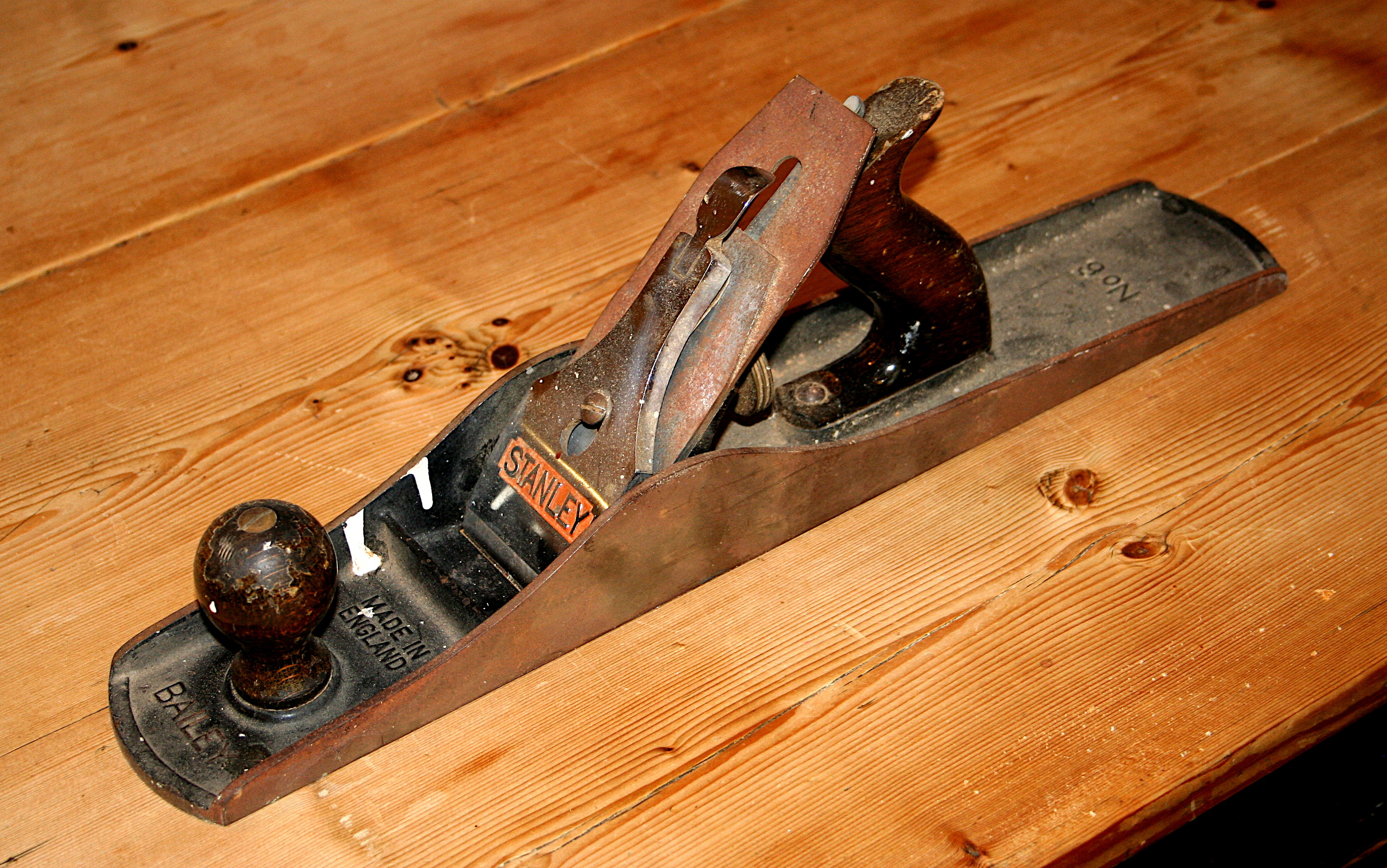
Cast iron bench planes, the most common variety in Polish workshops, behave predictably in the cold: the frog, the cap iron, and the blade all contract slightly at temperatures below 5°C. In most cases the effect is small enough to ignore, but on planes with tight tolerances — particularly antique or high-end tools with close-fitting lever caps — the contraction can cause chatter that does not appear at room temperature.
The practical response is to run a finger across the blade seating area and cap iron contact surface before starting work. If there is perceptible movement, tighten the lever cap incrementally. Overly tight adjustment can spring the cap iron and introduce its own problems, so small corrections are preferable to a single large one.

Chisels in Cold Conditions
The primary concern with chisels below freezing is not the metal but the handle. Traditional ash and beech handles become more brittle at low temperatures, and striking a frozen handle with a mallet carries a slightly higher risk of cracking along the grain. Hornbeam handles, common on older Polish workshop tools, are more resistant to this. Polypropylene and fibreglass handles are indifferent to cold.
Edge retention is not significantly affected by ambient temperature, though cold wood — particularly dense species like oak or robinia — presents more resistance, which can accelerate edge wear if the chisel is not sharp. Sharpening stones require attention: water stones should not be left in an unheated workshop overnight, as absorbed water expands when frozen and can fracture the stone. Oil stones are a practical alternative for cold-workshop use, and synthetic ceramic stones require no liquid at all.
Sharpening Stone Types for Cold Conditions
- Oil stones — work at any temperature, unaffected by freezing
- Ceramic stones — no liquid required, stable in low temperatures
- Diamond plates — used dry, function normally below 0°C
- Water stones — store indoors in winter to prevent fracture
Saws: Tension and Tooth Set
Traditional frame saws — the bow saw and the frame tenon saw — rely on the tension of a cord or metal frame to hold the blade taut. In cold conditions, wooden frames can shrink slightly, which may actually increase blade tension rather than reduce it. This is rarely a problem in practice, but it is worth checking that a blade that was correctly tensioned at room temperature has not become over-tensioned after a cold night, which would make the blade harder to track accurately.
Japanese-style saws with thin blades can be more sensitive to thermal changes because the blade relies on precise lateral stiffness rather than frame tension. In a workshop that cycles between cold days and heated working hours, these saws may require occasional retensioning by the manufacturer or a specialist.
Lubrication and Corrosion Prevention
Condensation is the main threat to hand tools in a workshop that is heated intermittently. When cold metal is brought into a warmer space, moisture from the air condenses on its surface. Over several cycles this leads to surface rust on tool beds, blades, and adjustment mechanisms.
Light machine oil applied to cast iron surfaces before the workshop cools down is the most practical protection. Camelia oil, the traditional choice for Japanese tools, is equally effective and somewhat less prone to going rancid.
For tool storage during winter months when a workshop is unheated for extended periods, wrapping tools in VCI (Volatile Corrosion Inhibitor) paper — available from industrial suppliers in Poland — provides protection without requiring oiling each individual component.
Bench Planes: Setting Up for Cold Wood
Wood that has been stored in an unheated barn or outbuilding over winter tends to be harder and more brittle at the surface. A freshly felled plank that was left in a cold shed may also have a slightly different moisture gradient than one conditioned in a heated space. Both conditions mean that a finely set plane — one intended for a light finishing pass — may chatter or dig in.
A practical approach is to use a slightly heavier cut than you would indoors, then reduce the cut progressively as the wood warms to ambient temperature over the working session. A cap iron set closer to the edge helps break chips on difficult grain.
Tool Selection Summary
For workshops that operate in cold conditions, the most reliable hand tools share certain characteristics: they have fewer adjustable components with tight tolerances, use handles made from dense hardwood or synthetic materials, and have surfaces that are easy to oil and wipe clean. Sheffield pattern chisels with thick blades, bevel-up bench planes with simple adjustment, and rip-ground handsaws with slightly heavier tooth set all perform more predictably in these conditions than their precision-oriented counterparts.
See also: Cold-Climate Wood Storage for information on how timber conditioning affects the behaviour of tools on the first pass.